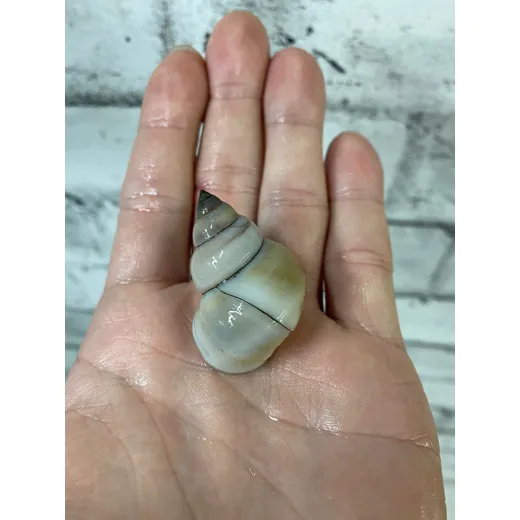
Wizard Snail – Filopaludina martensi
The Wizard Snail (Filopaludina martensi) is a large, uncommon snail native to Southeast Asia. It resembles mystery snails but belongs to the same family as piano snails (Taia naticoides). These gentle snails grow up to nearly 2 inches in size and are considered plant-safe unless starved.
Wizard snails are not primarily algae eaters. Instead, they are detrivores that feed on detritus and bacterial growth found on the bottom of the tank. They also readily consume sinking fish foods. Additionally, they can supplement their diet through filter-feeding: their gills trap tiny organic particles while breathing, which are then transferred to their mouth.
These snails breed easily, though their reproduction is slow. They are well-suited for freshwater aquariums where natural detritus and organic matter are present.
| Feature | Detail |
|---|---|
| Species | Filopaludina martensi |
| Size | Up to 2 inches |
| Feeding Habits | Detritus, bacterial growth, sinking fish food |
| Filter-Feeding | Yes, but not primary food source |
| Breeding | Easy, but slow |
FAQ
What do Wizard Snails primarily eat?
Wizard Snails are detrivores and primarily eat detritus and bacterial growth on the tank bottom. They also consume sinking fish foods. Filter-feeding supplements their diet but is not their main food source.
Are Wizard Snails safe for plants?
Yes, Wizard Snails are generally plant-safe unless starved. They do not typically damage live plants.
How do Wizard Snails feed through filter-feeding?
Their gills trap minute organic particles as they breathe, which are then transferred to their mouth. This is a supplementary feeding method and not sufficient on its own.


Connor Harris –
I added a few Wizard Snails to my freshwater tank and they’ve been active and peaceful. They don’t seem to eat plants, which is great. I feed them sinking fish food regularly and they’re always busy cleaning the substrate. They’re a bit larger than mystery snails, but that’s not a problem in my setup.
Harry Abraham –
The snails arrived healthy and seem to be adjusting well. I noticed they’re eating detritus on the bottom and occasionally the sinking food. They don’t bother my plants, and I appreciate their role in keeping the tank clean.
Christian Springer –
After a few weeks, I saw them breeding—very encouraging. They’re gentle, easy to care for, and help maintain the tank’s cleanliness without causing any issues. A great addition to a planted or natural-looking aquarium.