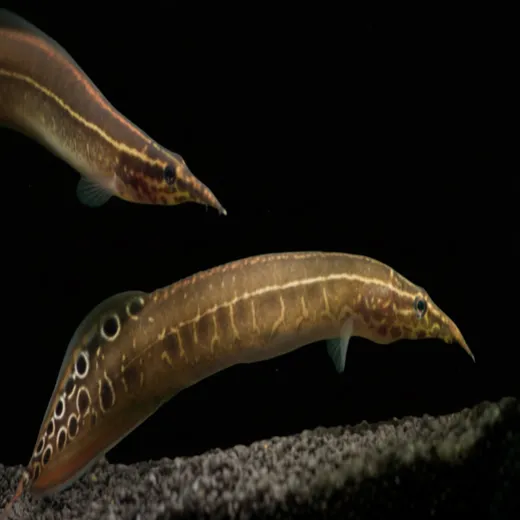
Spiny Eel (Mastacembelus & Macrognathus spp.)
Curious, intelligent and unlike almost any other aquarium fish, Spiny Eels are fascinating bottom-dwelling predators that quickly become the stars of the aquarium. Despite their eel-like appearance, they are not true eels and are renowned for recognising their keepers, exploring every corner of the tank and developing surprisingly interactive personalities.
Quick Facts
| Brand: | Aquatic Solutions |
|---|---|
| Product type: | Misc Fish |
| Model / Variant: | 6cm |
| Size / Capacity: | 15 cm |
| Suitable for: | Species-appropriate, established aquariums |
Is this for you?
Spiny Eels are best suited for experienced aquarists with a well-established tank and a commitment to providing a stable environment. They require ample space, hiding spots, and a diet rich in live or frozen prey. These fish are not recommended for beginners due to their active nature and specific care needs.
FAQ
What is the typical size of the Spiny Eel after reaching maturity?
The Spiny Eel grows to a maximum size of 15 cm in length.
Can Spiny Eels be kept with other fish?
Spiny Eels are generally solitary and should be kept with non-aggressive, larger fish that can avoid their predatory behavior. They are not recommended for tanks with small or active fish that may be seen as prey.
How long do Spiny Eels typically live in captivity?
Please contact customer service


Natalie Gray –
The Spiny Eel has become a highlight in my 120-liter tank. It recognizes me and comes to the surface when I approach. I provide live food daily and it’s very active in the bottom area. Needs a large tank and stable water conditions, but worth the effort.
Carol Rampling –
First time keeping a spiny eel and it’s been two months. It’s curious and explores the tank constantly. I’ve added plenty of caves and hiding spots. Feeds well on bloodworms and daphnia. Not for beginners, but a great addition to an established aquarium.
Stephanie Taylor –
It’s active and seems intelligent, but it’s not as calm as I expected. I had to adjust the tank layout to give it enough space. Feeding is straightforward, but it takes time to adjust to the tank environment.