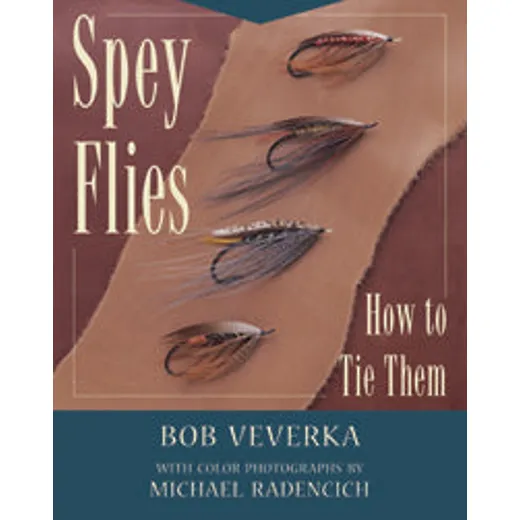
Spey Flies & How to Tie Them by Bob Veverka
Elegant and graceful, Spey flies originated on the River Spey in northeastern Scotland and are well over 150 years old. Author Bob Veverka gives the history and background on classic Spey, Dee, Don, Eagle, and Steelhead Spey patterns, including step-by-step tying instructions.
Classic Patterns Covered
- Spey
- Dee
- Don
- Eagle
- Steelhead Spey
What You’ll Learn
Step-by-step tying instructions for each pattern, with historical context and traditional techniques.
| Pattern | Origin | Key Features |
|---|---|---|
| Spey | River Spey, Scotland | Classic design, elegant profile |
| Dee | Scottish tradition | Simple, effective for clear water |
| Don | Traditional Scottish fly | Sturdy, durable construction |
| Eagle | Based on natural prey | Wide wings, strong action |
| Steelhead Spey | Adapted for steelhead fishing | Streamlined, fast-moving design |
FAQ
Are the tying instructions suitable for beginners?
The step-by-step instructions are designed to be clear and accessible, making them suitable for both beginners and experienced fly tiers.
Do the patterns include materials needed for tying?
The book provides detailed tying instructions but does not list specific materials or thread types required for each pattern.
Is this book suitable for anglers who fish in Scotland?
Yes, the book covers traditional Scottish patterns and their historical roots, making it valuable for anglers familiar with Scottish waters.


Leah Underwood –
The book offers clear, detailed instructions for tying classic Spey flies. I followed the steps for the Spey and Don patterns and found them easy to replicate. The historical context adds depth to the fishing experience.
Irene McGrath –
As a long-time fly fisher, I appreciate the traditional approach. The Eagle and Steelhead Spey patterns are well explained with practical tips that help improve casting and presentation.
Jennifer Jackson –
The book is well-organized and informative. I used it to recreate a few patterns I had seen in the field. Some steps could be clearer, but overall it’s a solid reference for traditional fly tying.
Luke Ince –
Bob Veverka’s writing is straightforward and respectful of the craft. The patterns are accurate and the tying process is logical. I now have a better understanding of how these flies evolved over time.