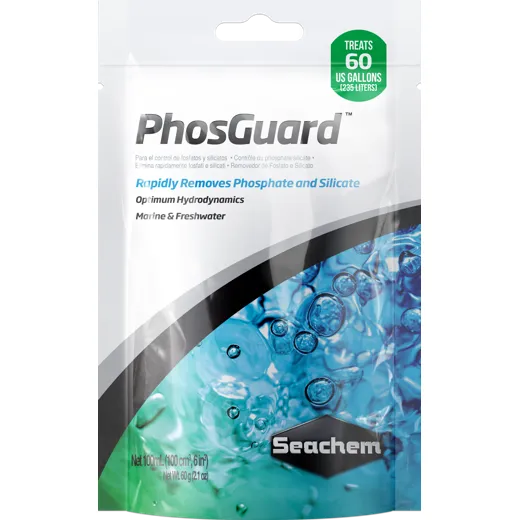
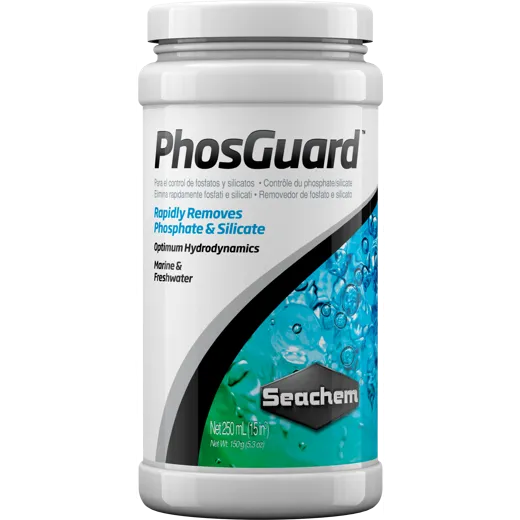
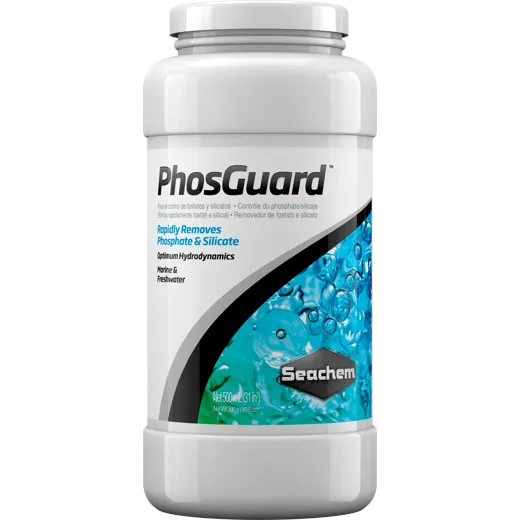
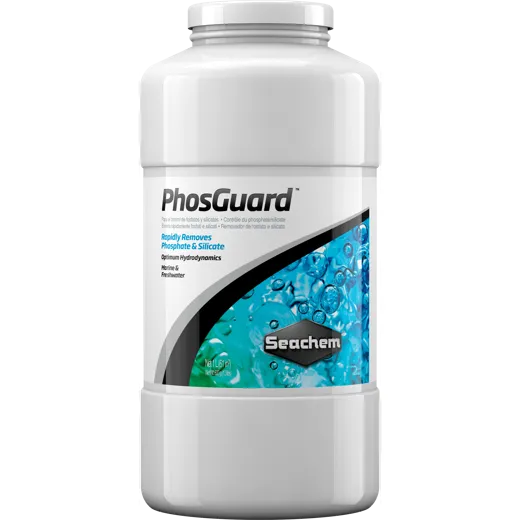
Seachem PhosGuard
PhosGuard rapidly removes phosphate and silicate from marine and freshwater aquaria. Although effective in both fresh and marine water, it performs better in seawater, where the need for it is more clearly defined. It is not recommended for use in phosphate-buffered freshwater, as it may remove the buffer until saturation.
Directions:
- May generate heat upon initial contact with water.
- Pre-wet by adding to a double volume of freshwater, then rinse thoroughly.
- Rinse before use to ensure effectiveness.
- Place the product to maximize water flow through it, avoiding direct obstruction of flow.
| Specification | Value |
|---|---|
| Form | Bead-shaped, porous |
| Target Contaminants | Phosphate, Silicate |
| Best Performance Environment | Seawater |
| Recommended Use | Marine and freshwater aquaria (not phosphate-buffered freshwater) |
FAQ
Can PhosGuard be used in phosphate-buffered freshwater?
No, PhosGuard is not recommended for use in phosphate-buffered freshwater as it may remove the buffer until saturation.
How should PhosGuard be prepared before use?
Pre-wet by adding to a double volume of freshwater, then rinse thoroughly before use.
Does PhosGuard work better in freshwater or marine water?
PhosGuard operates more effectively in seawater, where its performance is better defined.


Jonathan May –
I’ve used PhosGuard in my marine tank for three months now. The phosphate levels have dropped significantly, and the water clarity has improved. It’s easy to handle and fits well in the filter setup. No issues with heat or clogging so far.
Victor Mitchell –
Works well in my saltwater aquarium. I pre-wet it as instructed and rinsed it before adding. The water flow through the filter is smooth, and I notice less algae growth since using it.
Joseph Berry –
Great product for controlling phosphate. I followed the instructions carefully and saw a noticeable improvement in water quality. The beads are porous and allow good water flow without blocking the filter.
Lucas Dyer –
It works, but I had to rinse it twice to get it ready. I’m not sure if it’s suitable for freshwater setups, as I haven’t tested it there. Still effective in my marine tank.