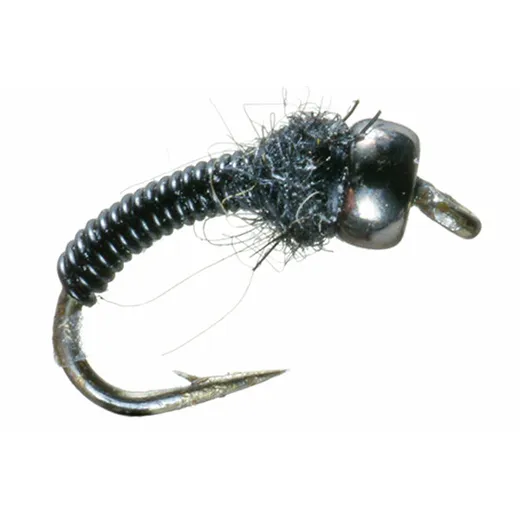

Poison Tung – Umpqua
Designed by Charlie Craven:
“The Poison Tung Midge was conceived one winter after reading about the power the color blue has over unsuspecting trout. I tried a variety of different patterns, with varying amounts of blue and found that a simple rib was just enough. I think this fly is best represented by the sum of its parts. The gray Ice Dub head provides the ashen look of an emerging midge and the blue rib shows up best in the depths where the fish feed the most. I have had great success with this pattern on such waters like the South Platte, the North Platte at Gray Reef, the Blue and Colorado, as well as the Frying Pan, where it never hurts to show them something a little different.”
Product Specifications
| Component | Detail |
|---|---|
| Head Type | Gray Ice Dub |
| Pattern | Blue Rib Midge |
| Best Use | Deep water fishing, trout feeding zones |
| Recommended Waters | South Platte, North Platte (Gray Reef), Blue River, Colorado River, Frying Pan |
FAQ
What makes the blue rib effective in deep water?
The blue rib stands out in deeper waters where light conditions are low, making it more visible to trout that feed in the depths.
Is the Poison Tung Midge suitable for all trout species?
It is primarily designed for trout species that feed in deep, shaded waters and respond well to subtle color patterns.
Can this fly be used in cold or clear water conditions?
Yes, it performs well in clear, cold water where trout are active and visibility is high.


Emma Baker –
Used this fly on the South Platte during a cold spring morning. The blue rib stood out in the deep pools and I caught three trout in under 30 minutes. Simple design, effective performance.
Keith May –
Fished it at Gray Reef and it worked well in the deeper runs. The gray head blends naturally with the water, and the blue rib catches the fish’s attention without being flashy.
Edward Pullman –
A reliable pattern for deep water fishing. I’ve used it on the Frying Pan and it consistently draws in trout when the water is clear and cold.
Anna McDonald –
The fly holds up well in the current and doesn’t break apart easily. I noticed a difference in catch rate compared to other midge patterns I’ve tried.