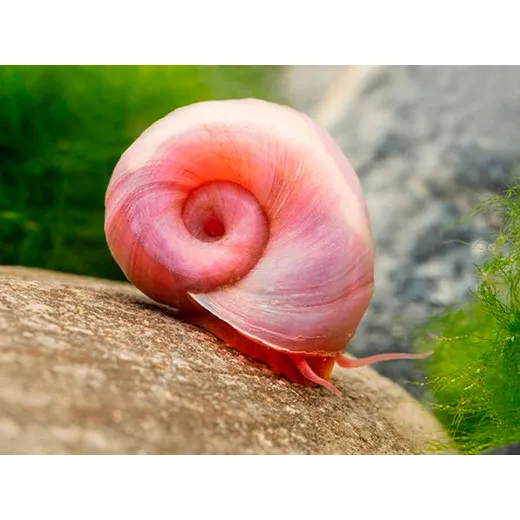
Pearl Pink Ramshorn Snail
The Ramshorn Snail is extremely effective at cleaning algae from aquarium glass, ornaments and plants. Larger in size than pest snails – around the size of a fifty-pence coin. Please note, pink ramshorns are a tropical species, not suitable for ponds or coldwater.
The term ramshorn snail or ram’s horn snail is used to describe various kinds of freshwater snails whose shells are planispiral, meaning that the shell is a flat coil. Such shells resemble a coil of rope, or (as the name suggests) a ram’s horn.
Ramshorn snails generally will eat only the most delicate plants, preferring algae and uneaten fish food. Some varieties do particularly enjoy eating the leaves of stem plants such as cabomba and anacharis.
| Specification | Detail |
|---|---|
| Species | Pink Ramshorn Snail |
| Shell Type | Planispiral (flat coil) |
| Size | Approximately the size of a fifty-pence coin |
| Temperature Requirement | Tropical; not suitable for coldwater or ponds |
| Preferred Diet | Algae, uneaten fish food, stem plant leaves (e.g. cabomba, anacharis) |
FAQ
Are pink ramshorn snails suitable for coldwater aquariums?
No, pink ramshorn snails are tropical species and require warm water conditions. They are not suitable for coldwater or pond environments.
Do ramshorn snails eat live plants?
They prefer algae and uneaten fish food, but some varieties will eat the leaves of delicate stem plants like cabomba and anacharis. They are not recommended for plants that are not very robust.
How big do pink ramshorn snails grow?
They grow to approximately the size of a fifty-pence coin.


Gabrielle McGrath –
I added a few pink ramshorn snails to my tropical aquarium and they’ve been cleaning the glass and plant surfaces effectively. They don’t seem to damage the plants, and I’ve noticed less algae buildup since introducing them. Great for maintaining a clean tank without needing frequent manual cleaning.
Ian Ball –
The snails are active and help keep the tank clean. I’ve seen them nibbling on algae on the glass and on the sides of the plants. They’re not aggressive and don’t eat my stem plants, which is a relief. I keep them in a warm tank, as recommended.
Maria Hill –
After a few weeks, the algae in my tank has reduced significantly. The snails are easy to care for and seem to thrive in the warm water. I didn’t expect them to be so effective at cleaning without causing any damage to the plants.