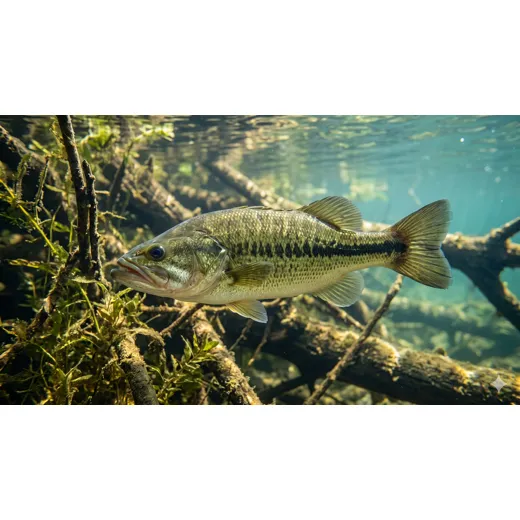
Native Largemouth Bass
The apex predator of the freshwater pond is the fish; every serious pond owner builds their fishery around.
The native largemouth bass is the undisputed king of the freshwater pond. Bold, aggressive, and built to hunt, the largemouth is the centerpiece of virtually every managed private fishery in the United States. Native strain largemouth are locally adapted, genetically pure fish, hardier and better suited to your regional water conditions than hatchery-stocked alternatives. They establish quickly, grow strong, and create the kind of self-sustaining trophy fishery that pond owners dream about.
Recognized by their olive-green back, white belly, and the bold dark lateral stripe running the length of their body, largemouth bass are as striking as they are powerful. A well-fed adult can reach lengths of 12 to 18 inches and weigh between 1 to 5 pounds.
| Specification | Detail |
|---|---|
| Species | Largemouth Bass |
| Origin | Native to North American freshwater systems |
| Size (length) | 12–18 inches |
| Weight | 1–5 pounds |
| Coloration | Olive-green back, white belly, dark lateral stripe |
| Adaptation | Locally adapted, genetically pure |
FAQ
Are native largemouth bass more resilient in local water conditions compared to hatchery fish?
Yes, native strain largemouth bass are locally adapted and genetically pure, making them harderier and better suited to regional water conditions than hatchery-stocked alternatives.
How long does it take for native largemouth bass to establish in a pond?
They establish quickly and begin to reproduce within the first season, contributing to a self-sustaining fishery.
What are the key physical features of native largemouth bass?
They have an olive-green back, white belly, and a bold dark lateral stripe running along their body.


Sean Springer –
The bass arrived healthy and active. After just two months, I already see them schooling in the deeper areas. They’re more aggressive and stay in the pond longer than the hatchery fish I tried before. Great for creating a natural fishery.
Diana Black –
I’ve had several pond fish setups over the years, but this native strain has been the most resilient. They adapt well to my local water temperature and pH. My pond now has a consistent population of active fish.
Vanessa Dyer –
The fish look exactly as described—color and pattern match well. They seem to grow steadily and are more active than previous stock. A bit more expensive, but worth it for long-term pond health.