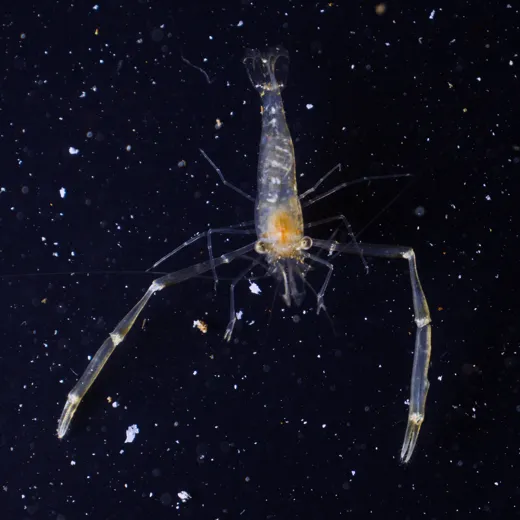
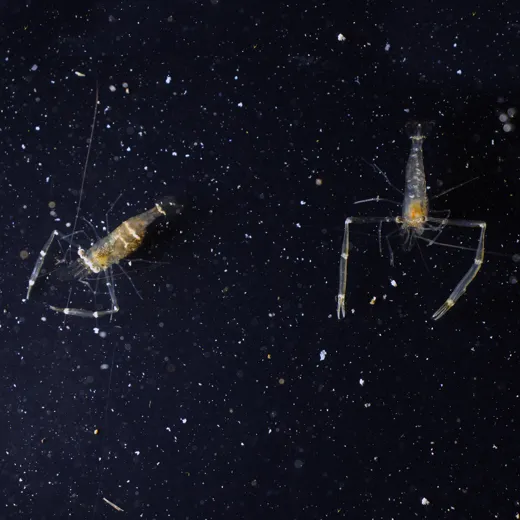
Long Arm Shrimp – Cuapetes sp.
The Long Arm Shrimp is a small and elegant species found throughout the tropical Indo-Pacific, including Palau. These shrimp are often observed living in close association with corals, anemones, or crinoids, where their transparent bodies and subtle striping allow them to blend seamlessly into their environment. This natural camouflage helps them avoid predators and demonstrates a remarkable adaptation to reef life.
In the wild, Cuapetes act as gentle scavengers, feeding on detritus, leftover food, and organic matter around their hosts. In aquarium settings, they do not require a host to survive and will accept a variety of standard aquarium foods. They are peaceful, non-aggressive, and reef-safe, making them ideal for nano tanks and community tanks with other small, non-aggressive species.
| Species | Cuapetes sp. |
|---|---|
| Habitat | Tropical Indo-Pacific, including Palau |
| Size | Small (exact size not specified) |
| Feeding | Detritus, leftover food, aquarium flakes or pellets |
| Compatibility | Peaceful, reef-safe; suitable for nano and community tanks with non-aggressive species |
FAQ
What do Long Arm Shrimp eat in an aquarium?
They eat detritus, leftover food, and can accept aquarium flakes or pellets. They do not require a host and are adaptable to various food sources.
Are Long Arm Shrimp safe for reef tanks?
Yes, they are peaceful and reef-safe, making them suitable for reef environments when paired with compatible species.
Do Long Arm Shrimp need to live with corals or anemones?
No, they do not require a host to survive in aquariums and can live independently.


Anthony Jones –
Added a Long Arm Shrimp to my 10-gallon nano tank and it’s been thriving. It blends in beautifully with the corals and doesn’t seem to compete with other inhabitants. Easy to care for and very peaceful.
Michael Wilkins –
The shrimp looks exactly like the photos. It’s active but not aggressive and helps clean up small bits of food. I didn’t have to provide any special diet, just regular flakes.
Molly Bailey –
Perfect for a small reef tank. It’s quiet, doesn’t disturb the ecosystem, and looks natural among the anemones. I’m happy with the addition.