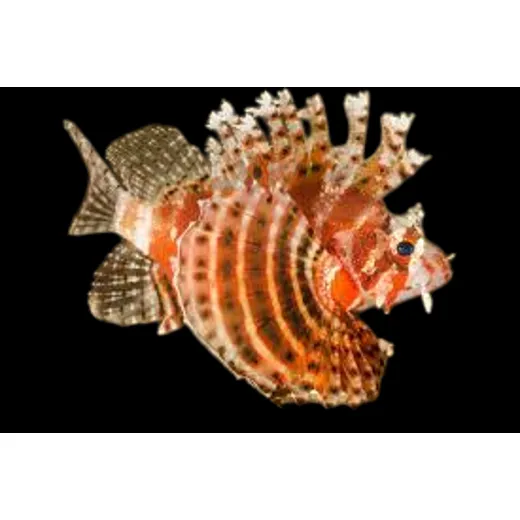
Dwarf Fuzzy Lionfish
The Dwarf Fuzzy Lionfish (Dendrochirus brachypterus) is an aggressive predatory species that is not reef-safe and will consume any small fish, shrimp, or crab that fits in its mouth. This striking fish features rich brown, tan, and cream banding across its compact body, along with elaborate, feathery pectoral fins and distinctive fuzzy-looking skin appendages that provide excellent camouflage among coral rubble and algae.
It remains motionless, using its cryptic coloration and fin structure to blend into its surroundings while waiting to ambush prey. The adult size typically reaches 6 to 7 inches.
Specifications
| Species | Dendrochirus brachypterus |
|---|---|
| Adult Size | 6–7 inches |
| Water Conditions | Gentle to moderate flow, stable parameters |
| Habitat Requirements | Minimum 55-gallon tank with caves, overhangs, and rocky hiding spots |
| Behavior | Aggressive predator, not reef-safe |
FAQ
Is the Dwarf Fuzzy Lionfish safe to keep with other fish?
No, the Dwarf Fuzzy Lionfish is not reef-safe and will eat small fish, shrimp, or crabs that fit in its mouth. It should not be kept with other small marine species.
What tank size is recommended for this fish?
A minimum of 55 gallons is recommended, with plenty of caves, overhangs, and hiding spots to provide security.
How does the Dwarf Fuzzy Lionfish hide in its environment?
It uses its feathery pectoral fins and fuzzy skin appendages to blend into coral rubble and algae, remaining motionless to ambush prey.


David Avery –
The lionfish looks stunning with its unique color pattern and fuzzy fins. It’s very active when hiding in the rockwork and seems to blend well with the coral. I keep it in a 75-gallon tank with plenty of caves. It’s not aggressive toward larger fish, but I avoid keeping anything small with it.
Joe Lyman –
A visually impressive addition to my tank. The camouflage is excellent and it’s a great visual focal point. I’ve observed it lying still for long periods, only moving when prey is nearby. Requires a well-structured tank with hiding spots.
Julian Hamilton –
It’s beautiful and unique, but I had to remove a small shrimp that was too small. I now keep only larger, non-susceptible species. The tank needs to be well-planted and have ample cover.