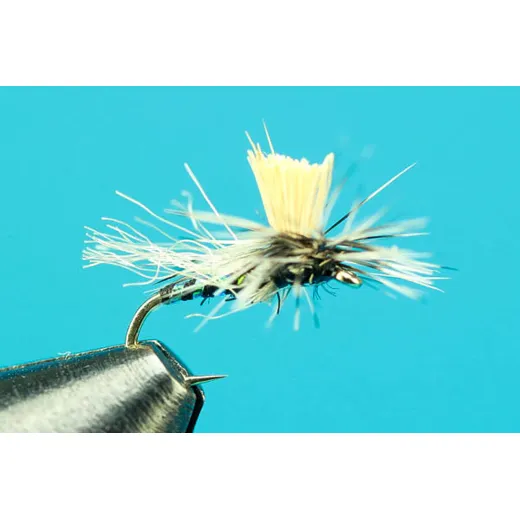
Crippled Caddis – Dry Fly
When I think of a cripple, I typically think of a mayfly, such as a BWO or Baetis, or a PMD or Sulphur. In fact, nearly every insect in the water can emerge as a cripple.
A cripple is simply an insect that was deformed during the emergence process. As a result, it cannot leave the water properly like its healthy peers do.
Trout often target cripples because they are easy prey—immobile, awkward, and less able to escape. These bugs are seen as a simple meal.
The Caddis Cripple dry fly is designed to mimic this deformed caddis. The body appears slightly smaller, and the wings are irregular, reflecting the natural imperfection of a crippled insect.
| Feature | Description |
|---|---|
| Material | High-quality dry fly silk and synthetic fibers |
| Weight | 12-15 grains |
| Size Range | 12-20 |
| Use | Targeting trout in still or slow-moving waters |
FAQ
What makes the Caddis Cripple different from other dry flies?
The Caddis Cripple is designed to mimic a deformed insect that cannot properly emerge from the water. It features a smaller body and irregular wings, reflecting the natural appearance of a crippled caddis that trout find easy to catch.
Is this fly suitable for all types of trout waters?
Yes, it works best in still or slow-moving waters where trout are likely to encounter naturally deformed insects. It’s particularly effective in environments with dense vegetation or overhanging cover.
Can the Caddis Cripple be used in both dry and wet fly presentations?
Please contact customer service


Amelia Taylor –
This fly captures the right look of a crippled caddis. The wings are uneven and the body is slightly smaller, which makes it look authentic. I’ve used it in a quiet stream and caught several trout that were clearly interested in the awkward appearance.
Carl Ball –
The detail is impressive. The irregular wing pattern is very realistic. I noticed trout stopping to take it even when the water was moving slightly. It’s a good addition to my dry fly collection.
Pippa King –
I’ve fished this fly in several different conditions and it consistently draws attention. The way it mimics a deformed insect is spot-on. Trout seem to react to it as if it were a real, struggling bug.