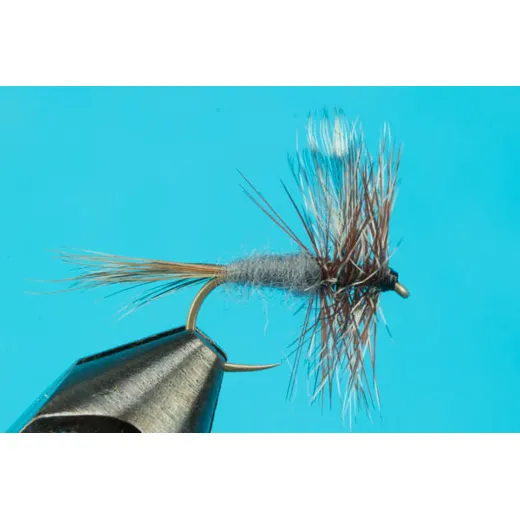
Barbless Adams by Big Y Fly Co.
The Adams is one of the most successful dry fly patterns of all time.
Can be used to imitate a plethora of mayfly hatches, including baetis, callibaetis, and the drakes.
Also used for caddis in-flight, and just a general “cast and see”.
Often times the first dry fly we cast, especially when nothing obvious is going on.
Invented in 1922 by Leonard Halladay and named after his friend Charles Adams.
Extremely popular — a must have for dry fly enthusiasts.
Product Specifications
| Feature | Detail |
|---|---|
| Pattern Type | Dry Fly |
| Barb Type | Barbless |
| Origin | 1922, invented by Leonard Halladay |
| Imitates | Mayflies (baetis, callibaetis), caddis in-flight |
FAQ
What makes the Adams pattern so popular among fly fishermen?
The Adams is widely used because it closely imitates common mayfly hatches like baetis and callibaetis, and it’s effective for both dry fly fishing and general casting when no clear action is visible.
Is the Adams pattern suitable for beginners?
Yes, the Adams is often the first dry fly anglers try due to its simplicity and reliability in imitating natural insects.
Can the Adams pattern be used for caddis flies?
Yes, it is commonly used to imitate caddis in-flight, making it a versatile pattern for various fly fishing situations.


Zoe Campbell –
I’ve used the Adams pattern for years and it’s still one of my go-to flies. It floats well and mimics the natural mayflies perfectly. The barbless design makes it easy to handle and retrieve.
Tracey Clark –
Great quality and consistent size. I use it during early morning hatches and it consistently gets bites. Works well in both still and moving water.
Donna Poole –
Solid pattern that performs well in typical mayfly hatches. A bit heavier than I expected, but still effective. Would recommend to any dry fly enthusiast.
Tracey Graham –
The Adams is a classic. I’ve been fishing with it since I started and it still holds up well. The barbless version is a big plus for easy casting and handling.