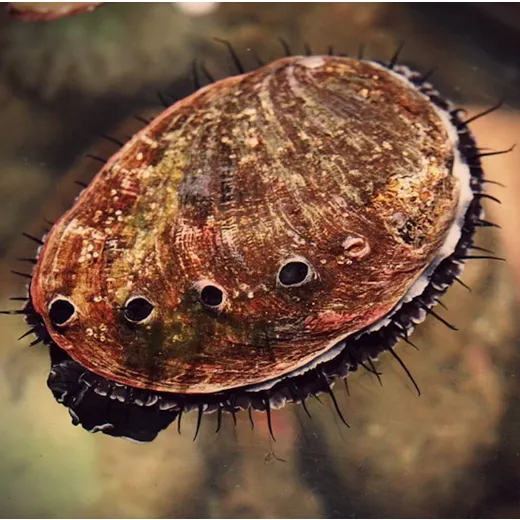
Abalone Snail – Haliotis spp.
Haliotis spp., commonly known as the Abalone Snail, is a powerful and highly efficient algae-grazing gastropod valued for both its utility and unique appearance. Recognized by its flattened, ear-shaped shell with a row of respiratory holes along one edge, the Abalone is a nocturnal grazer that spends much of its time clinging tightly to rockwork and hard surfaces. Though less visible than other cleanup crew members, Abalone Snails are among the most effective algae consumers available for reef aquariums.
| Origin | Indo-Pacific |
|---|---|
| Depth | Intertidal to shallow reef zones (0–20 m / 0–65 ft) |
| Lighting | Not demanding; comfortable under all standard reef lighting conditions |
| Flow | Moderate |
FAQ
What type of environment does the Abalone Snail prefer?
The Abalone Snail thrives in reef aquariums with moderate water flow and is comfortable in a range of lighting conditions, from low to standard reef lighting.
How does the Abalone Snail contribute to a reef tank?
It is a nocturnal grazer that efficiently consumes algae, helping to maintain clean surfaces on rocks and glass, reducing the need for manual cleaning.
Is the Abalone Snail suitable for beginners?
Yes, due to its low maintenance requirements and tolerance of standard aquarium conditions, it is a good choice for both novice and experienced reef keepers.


Richard Rampling –
I’ve had the Abalone Snail in my tank for three months now. It’s been very active at night, eating algae on the rocks without causing any disturbances. The shell is distinctive and adds a nice touch to the tank. No issues with compatibility or health so far.
Robert Poole –
It’s a quiet but effective cleaner. I didn’t see much movement during the day, but at night it’s always active. The algae levels have dropped noticeably since adding it. Works well with my existing tank setup.
Wendy Bailey –
Great addition to my reef tank. It doesn’t seem to stress other inhabitants and is very hardy. The shell is a nice visual element. I’ve noticed a significant reduction in green algae on the substrate and glass.