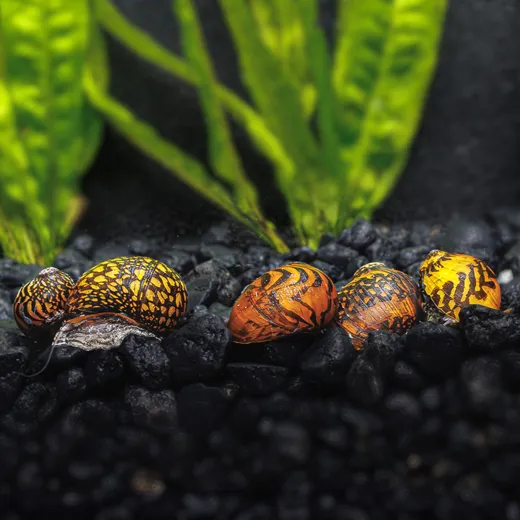
Pack of 3 Batik Nerite Snails
The batik nerite snail has eye-catching black and gold patterns that make it a perfect choice for nano and planted aquariums. Native to Indonesia, the batik nerite snail can live for more than four years, which is longer than many other snails. While adult batik nerite snails thrive in freshwater, their babies need brackish or saltwater to grow, so they won’t breed in a regular freshwater tank.
Background and Key Benefits
Nerite snails or Neritina sp. are freshwater snails related to the mollusk family. They will clean algae from glass, substrate, and décor. They are also so popular in our hobby because they do not reproduce in freshwater. In the wild these snails return to brackish water to breed and the baby snails require brackish water to grow.
| Feature | Detail |
|---|---|
| Species | Batik Nerite (Neritina sp.) |
| Quantity | 3 snails |
| Origin | Indonesia |
| Lifespan | Over 4 years |
| Water Type | Freshwater (adults); brackish (juveniles) |
| Breeding | Does not breed in freshwater |
FAQ
Do batik nerite snails clean algae effectively?
Yes, batik nerite snails are effective at cleaning algae from glass, substrate, and aquarium décor.
Can these snails breed in a freshwater tank?
No, batik nerite snails do not breed in freshwater. Their babies require brackish or saltwater to grow.
How long do batik nerite snails live?
They can live for more than four years with proper care.


Andrew Nolan –
I bought three batik nerite snails for my 10-gallon planted tank. The black and gold patterns are very striking. They’ve been cleaning algae on the glass and plants for over two months. I didn’t expect them to stay active this long, and they haven’t reproduced in freshwater yet, which is great for my setup.
Anne Simpson –
The snails arrived quickly and look exactly as described. They’re active and help keep the algae under control. I’ve noticed they don’t lay eggs in my freshwater tank, which is a relief. I’ll keep them for a while and monitor their health.
Jonathan Glover –
Great addition to my nano aquarium. The coloration is unique and they’re very hardy. After a few weeks, they’ve cleaned up the back wall and the substrate. No signs of breeding, which is exactly what I wanted.