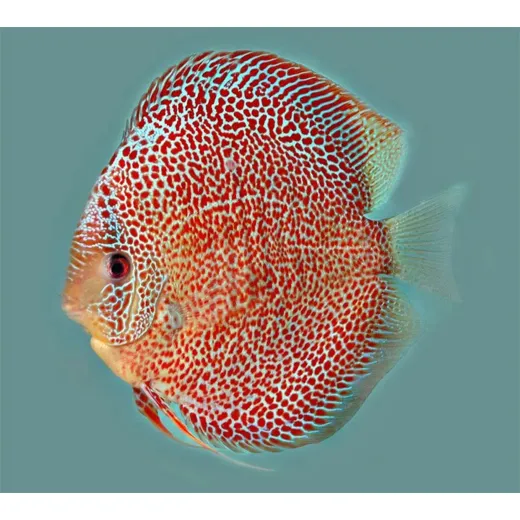
Snakeskin Discus
Description:
The Snakeskin Discus is an exotic and striking species renowned for its intricate pattern resembling that of a snake’s skin. This variety stands out in any aquarium with its dynamic markings and is highly prized by Discus enthusiasts worldwide.
Features:
- Complex snakeskin-like pattern across the body
- Vibrant hues and a shimmering sheen
- Social and peaceful, best kept in groups
- Highly sought-after by Discus collectors
Care:
Snakeskin Discus prefer soft to medium-hard water, with temperatures kept between 27-30°C. They require high-quality, varied diets, with a preference for protein-rich foods.
| Parameter | Value |
|---|---|
| Water Temperature | 27-30°C |
| Water Hardness | Soft to medium-hard |
| Diet | Protein-rich, varied foods |
FAQ
What makes the Snakeskin Discus stand out among other discus species?
The Snakeskin Discus is distinguished by its intricate, snake-like pattern across the body, which gives it a unique and striking appearance that sets it apart from other discus varieties.
How should I care for a Snakeskin Discus in my aquarium?
Maintain water temperature between 27-30°C and provide soft to medium-hard water. Feed a high-quality, varied diet with a strong emphasis on protein-rich foods.
Is the Snakeskin Discus suitable for a community tank?
Yes, Snakeskin Discus are social and peaceful fish and thrive best when kept in groups.


Madeleine White –
The Snakeskin Discus is absolutely stunning. The pattern is vivid and unique, making it a centerpiece in my aquarium. I keep them in a group of five and they get along well with other peaceful fish. The color shines under proper lighting and they seem healthy and active.
Blake Mackay –
I bought this fish for my discus collection and it’s a great addition. The markings are very detailed and look like real snake skin. I’ve noticed they’re active and enjoy the protein-rich food I offer.
Audrey Parr –
After adding the Snakeskin Discus to my tank, the visual appeal has improved significantly. They’re calm and social, and I’ve seen them interact positively with the group. Water parameters are stable and I maintain a consistent feeding schedule.