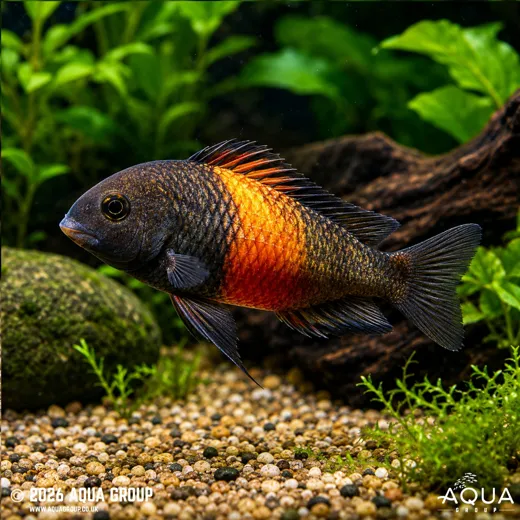
Bemba Orange Flame Tropheus
A Lake Tanganyika cichlid carrying a broad blaze of orange across a dark body. Spectacular in a colony, and a genuinely specialist fish with specific requirements.
Feeding
Strictly herbivorous. Spirulina-based flake and pellets only. Bloodworm and other protein-rich foods cause a fatal digestive condition known as bloat.
Compatibility
Highly aggressive toward its own kind. Must be kept as a large colony of fifteen or more so aggression is spread, never as a pair or small group. Best in a species tank.
Behaviour and personality
Constantly active, constantly squabbling, and endlessly watchable. A settled colony has a visible pecking order.
Before you buy
This is not a community fish. It needs hard alkaline water, a large tank, a large group.
| Parameter | Value |
|---|---|
| Origin | Lake Tanganyika |
| Diet | Herbivorous (Spirulina-based only) |
| Group Size | 15 or more |
| Water Conditions | Hard, alkaline |
| Aggression Level | High |
FAQ
What type of food should I feed my Bemba Orange Flame Tropheus?
Feed only spirulina-based flakes and pellets. Bloodworms and protein-rich foods can cause a fatal condition called bloat.
Can I keep this fish with other species?
No, this fish is highly aggressive toward its own kind and should only be kept in a species tank with others of the same type.
How many fish should I keep in a group?
At least fifteen fish are required to spread aggression and maintain stability. Never keep in pairs or small groups.


Karen Chapman –
The Bemba Orange Flame Tropheus is a stunning fish with vibrant orange coloring. After setting up a large tank with hard alkaline water and a group of fifteen, the fish became very active and established a clear hierarchy. Feeding them spirulina pellets only has been essential to avoid health issues. A rewarding but demanding species for experienced aquarists.
Sean Coleman –
I’ve kept this fish for over a year in a 120-gallon tank. The orange color is striking, and the colony is always lively. I had to adjust my feeding to spirulina only, and I’ve avoided protein-based foods. The aggression is intense, but it’s manageable with a large group.
Liam Hunter –
The fish look beautiful in a group, but the aggression is overwhelming. I tried keeping them in a smaller group, which led to constant fighting. After switching to a group of fifteen and ensuring hard water, the situation improved significantly.