Multibarred Angelfish: Expert-Level Care
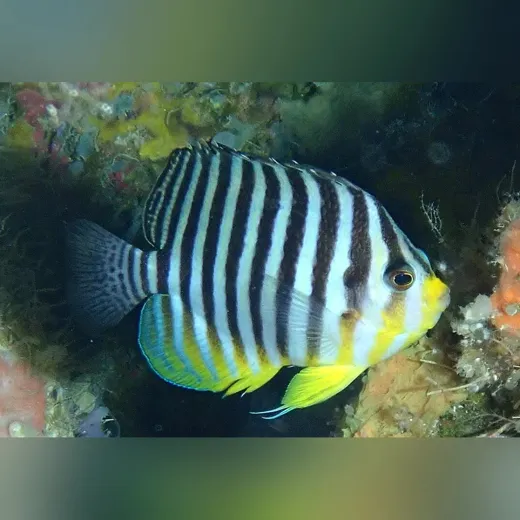
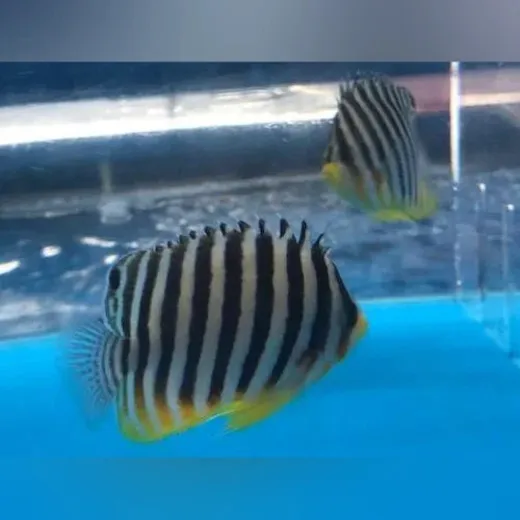
The Multibarred Angelfish (Paracentropyge multifasciata), also known as the Many-Banded Angelfish or Barred Angelfish, is a strikingly patterned but demanding dwarf angelfish species. It is characterized by its white or pale yellow body crossed with 8 to 9 bold, vertical black bands, a yellow snout and belly, and usually a blue eyespot (ocellus) on the dorsal fin of juveniles.
This species originates from the steep outer reef slopes of the Indo-Pacific, typically inhabiting deep caves and crevices between 60 to over 200 feet. Because of its deepwater origin and specialized dietary needs—particularly its reliance on sponges—the Multibar Angel is generally only recommended for advanced aquarium enthusiasts with a well-established, stable reef system.
| Key Features | Details |
|---|---|
| Scientific Name | Paracentropyge multifasciata |
| Size | Up to 3 inches (7.5 cm) |
| Origin | Indo-Pacific outer reef slopes |
| Water Temperature | 75–82°F (24–28°C) |
| Water pH | 8.1–8.4 |
| Diet | Specialized sponge-based diet; requires live or frozen foods |
FAQ
What are the key care requirements for the Multibarred Angelfish?
The Multibarred Angelfish requires a stable reef aquarium with water parameters between 75–82°F (24–28°C) and a pH of 8.1–8.4. It needs a diet rich in sponges and other specialized foods, and a well-established environment with deep crevices and hiding spots.
Is the Multibarred Angelfish suitable for beginner aquarists?
No, the Multibarred Angelfish is not suitable for beginner aquarists. It has specific dietary and environmental needs and requires advanced knowledge of reef aquarium maintenance.
How does the Multibarred Angelfish behave in a community tank?
This species is generally peaceful but can be territorial, especially during feeding or when stressed. It should be kept with compatible, non-aggressive reef fish and in a spacious tank with ample hiding places.


Steven Peake –
After years of keeping reef fish, I finally added a Multibarred Angelfish to my 120-gallon tank. It’s beautiful with its bold black bands and yellow belly. The fish is active and curious, but I had to adjust my feeding schedule to include sponge-based foods. It’s a challenge, but worth it for the visual impact.
Benjamin Underwood –
I’m not a beginner, but I was nervous about adding this fish. The setup took time to stabilize, and I had to research sponge feeding methods. Once the water parameters were stable, the angelfish settled in well and looks stunning in the corner of the tank.
Frank Dowd –
The fish arrived healthy and looks good. I’ve been feeding it frozen foods and sponges, but it hasn’t shown much interest. I’m still adjusting the diet and tank conditions. It’s a long-term commitment, and I’m learning as I go.