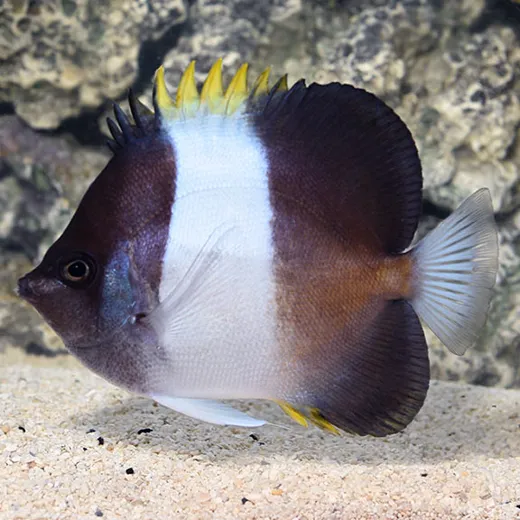
Zoster Butterflyfish (Black Pyramid Butterflyfish)
The Zoster Butterflyfish, also known as the Black Pyramid Butterflyfish, occurs in large numbers among the reefs of the Indian Ocean. They are black in color with a wide vertical white band covering the middle of the body. The dorsal fin is colored in the same pattern as the body, but has the addition of yellow on the tips of the white band.
The Zoster Butterflyfish is quite shy and should be provided with multiple hiding places. The ideal aquarium will be at least 125 gallons and will contain plenty of live rock that will provide cover from the light and a supplemental food source. If underfed, the Zoster Butterflyfish may occasionally pick at xenia or other soft corals. Feeding several times daily is recommended.
The Zoster Butterflyfish diet should consist of frozen and flake foods.
| Specs | Details |
|---|---|
| Species | Zoster Butterflyfish |
| Color | Black body with vertical white band; yellow tips on dorsal fin |
| Adult Size | Up to 6 inches |
| Water Temperature | 75–82°F |
| Water pH | 8.1–8.4 |
| Water Hardness | 8–12 dGH |
| Compatibility | Best with non-aggressive, reef-safe tankmates |
FAQ
What is the ideal tank size for a Zoster Butterflyfish?
The ideal aquarium size for a Zoster Butterflyfish is at least 125 gallons to provide adequate space and hiding places.
What kind of diet does the Zoster Butterflyfish require?
The Zoster Butterflyfish should be fed a diet consisting of frozen and flake foods, fed several times daily to prevent it from picking at soft corals.
How does the Zoster Butterflyfish behave in a tank?
The Zoster Butterflyfish is shy and requires multiple hiding spots. It prefers environments with plenty of live rock for cover and security.


Amanda Arnold –
The Zoster Butterflyfish is a beautiful addition to my reef tank. It’s active during the day and hides well in the live rock. I feed it twice daily with frozen foods and it’s very peaceful. The white band on its body stands out well against the dark background.
Liam Underwood –
I’ve had this fish for three months now. It’s shy at first but settles into the tank after a few weeks. I make sure to provide plenty of hiding spots and feed it several times a day. It’s not aggressive and doesn’t bother the corals.
Jane Mathis –
The fish looks exactly like the photo. It’s very active and curious, especially when food is introduced. I keep it in a 150-gallon tank with live rock and it’s doing well. Feeding it frozen foods daily keeps it healthy and happy.