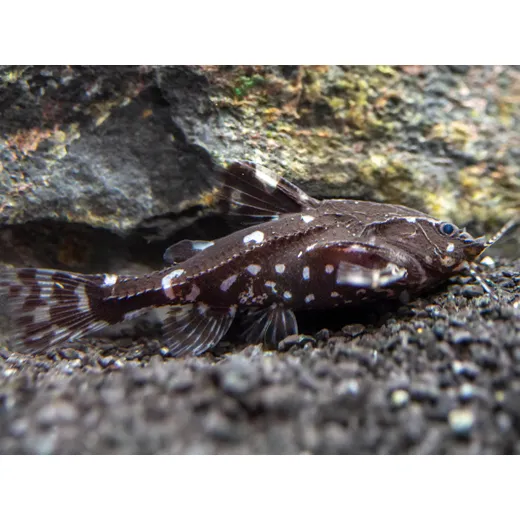
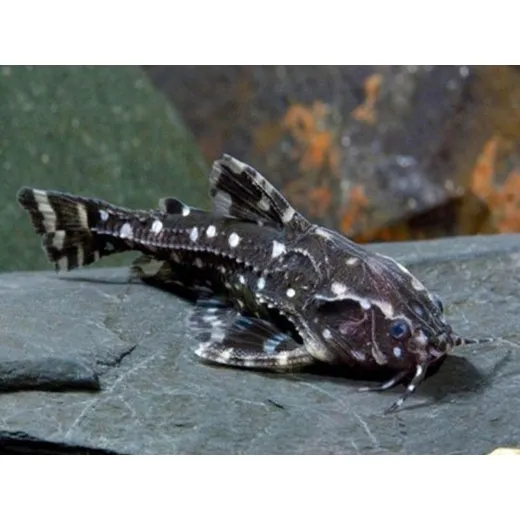
White Spot Talking Catfish (Agamyxis pectinifrons)
The White Spot Talking Catfish is a fascinating and hardy species, named for the audible “clicking” or “talking” sounds it can produce by rubbing its pectoral fins. Covered in a dark brown to black body with bright white spots, this shy, nocturnal catfish is a beautiful and unique addition to larger community aquariums. It prefers dim lighting, plenty of hiding spots like caves and driftwood, and will emerge more often at feeding time. Peaceful by nature, the White Spot Talking Catfish does well with a variety of non-aggressive tankmates.
Need to Know:
-
Recommended For: Peaceful community or semi-aggressive tanks
-
Minimum Tank Size: 100 litres
| Feature | Detail |
|---|---|
| Body Color | Dark brown to black with bright white spots |
| Behavior | Shy, nocturnal, makes clicking sounds by rubbing pectoral fins |
| Light Preference | Dim lighting |
| Feeding Behavior | Emerges at feeding time |
| Compatibility | Peaceful; pairs well with non-aggressive species |
FAQ
What kind of lighting does the White Spot Talking Catfish prefer?
The White Spot Talking Catfish prefers dim lighting and tends to stay hidden during the day. It becomes more active at night and during feeding times.
Can this catfish be kept with other fish?
Yes, it is peaceful and compatible with non-aggressive tankmates. It works well in community tanks with similarly calm species.
How does the catfish produce its ‘talking’ sound?
The catfish produces a clicking or ‘talking’ sound by rubbing its pectoral fins together, a natural behavior observed in the species.


Oliver Sutherland –
I added the White Spot Talking Catfish to my 100-litre tank and was amazed by its unique clicking sound. It stays hidden most of the time but comes out during feeding. The white spots stand out well against the dark body. I keep it with peaceful tetras and it hasn’t shown any aggression. A fun and interesting addition to the tank.
Benjamin Wilson –
The catfish is shy but fascinating. I noticed it makes a soft clicking noise when it moves. I provide plenty of caves and driftwood, and it uses them often. It’s not active during the day, but it’s a great visual and auditory surprise at night.
Sam Sharp –
This fish is a real standout. The white spots are clearly visible, and the clicking sound is unique and entertaining. I’ve kept it with dwarf corydoras and it coexists peacefully. The tank needs dim lighting, which I’ve adjusted, and it’s thriving.