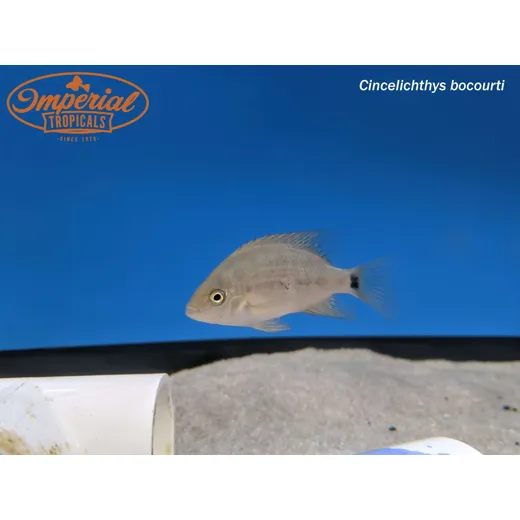
Chisel Tooth Cichlid
Scientific Name: Cincelichthys bocourti
Common Name: Chisel Tooth Cichlid
Max Size: 14″
pH: 6.0-8.0
Hardness: Hard
Temperature: 70-82°
Chisel Mouth Cichlids are large, yellow cichlids native to Guatemala. They may display black vertical bars when active, creating a bumblebee-like appearance. These fish are aggressive and territorial during spawning, similar to other large Central American cichlids, and require a minimum tank size of 75 gallons for a pair. Outside of breeding periods, they are generally considered relatively calm for their size.
| Feature | Value |
|---|---|
| Scientific Name | Cincelichthys bocourti |
| Common Name | Chisel Tooth Cichlid |
| Max Size | 14 inches |
| pH Range | 6.0 – 8.0 |
| Water Hardness | Hard |
| Temperature Range | 70° – 82° F |
| Aggressiveness | High during spawning; moderate otherwise |
| Minimum Tank Size | 75 gallons |
FAQ
What is the typical behavior of Chisel Tooth Cichlids outside of spawning?
Outside of spawning, Chisel Tooth Cichlids are generally considered fairly calm and can coexist with other compatible fish in a well-maintained tank.
What is the ideal tank size for housing a pair of Chisel Tooth Cichlids?
A minimum of 75 gallons is recommended for housing a pair, as they become highly territorial during breeding.
Can Chisel Tooth Cichlids be kept with other fish?
They should not be kept with small or shy fish due to their aggressive nature during spawning. Compatible tankmates should be large and robust.


Rose Churchill –
Bought a pair for my 100-gallon tank. They were active and colorful, showing the yellow body with black bars when excited. Spawning season was intense, but after that they settled into a calm routine. Good for experienced aquarists.
Natalie Ferguson –
The fish arrived healthy and look vibrant. I had to keep them separate during breeding, but otherwise they’re peaceful. Tank needs to be large and stable to keep them happy.
William Campbell –
After a few months, the fish have become quite territorial, especially at night. I now have a dedicated breeding area. They’re visually striking and add a lot of character to the tank.
Joanne Bell –
They were aggressive during the first few weeks. I didn’t have enough space, so I increased the tank size. Now they’re more manageable, but still require careful monitoring.
Emma Clark –
The coloration is impressive, especially when they’re active. I’ve kept them with a few large, calm fish, and they’ve adapted well. A great choice for a mature aquarium setup.