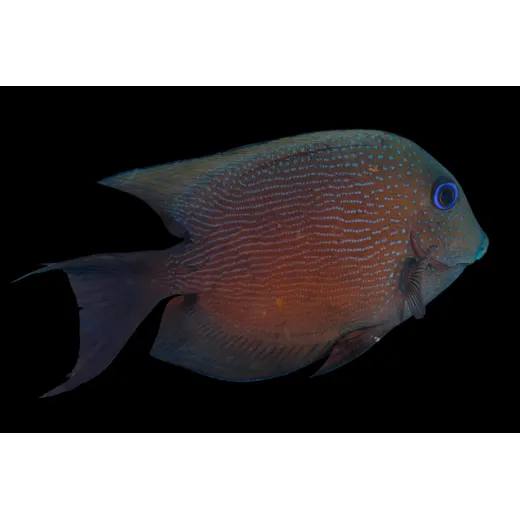
Two Spot Bristletooth Tang (Ctenochaetus binotatus)
The Two Spot Bristletooth Tang is a semi-aggressive fish that is reef-safe, posing no threat to corals or most invertebrates. It primarily feeds on detritus and fine algae, making it a valuable grazer in a marine aquarium. This species features a dark brown to purple body with two distinct bright spots, giving it its common name. Subtle blue accents and characteristic bristle-like teeth allow it to efficiently scrape algae and detritus from surfaces.
Physical Characteristics
| Feature | Detail |
|---|---|
| Body Color | Dark brown to purple with two bright spots |
| Accents | Subtle blue highlights |
| Teeth | Bristle-like, adapted for scraping algae and detritus |
| Adult Size | About 7 inches |
| Recommended Tank Size | At least 75 gallons |
Due to its active grazing behavior, this fish requires a spacious tank to thrive and maintain natural movement patterns.
FAQ
Is the Two Spot Bristletooth Tang safe to keep with corals?
Yes, the Two Spot Bristletooth Tang is considered reef-safe and does not pose a threat to corals or most invertebrates.
What does this fish primarily eat?
It primarily feeds on detritus and fine algae, making it an effective grazer in a reef tank.
How big does the Two Spot Bristletooth Tang grow?
It can reach an adult size of about 7 inches.


Alexander Simpson –
Added the Two Spot Bristletooth Tang to my 100-gallon reef tank and it’s been active and healthy for over six months. The two bright spots stand out well against the dark body, and it’s been consistently grazing on algae without disturbing the corals. Easy to spot and a great addition to a balanced reef system.
Anthony MacLeod –
This tang is a visually striking fish with clear markings. It’s not overly aggressive and seems to coexist well with other tank inhabitants. I noticed it spends a lot of time scraping algae from the glass and rock surfaces. A good choice for a reef tank with adequate space.
Brian Morrison –
The fish arrived healthy and has been active since setup. Its coloration is vibrant, and the bristle-like teeth are clearly visible. It’s one of the most recognizable tang species and adds a nice dynamic to the tank without causing any issues.