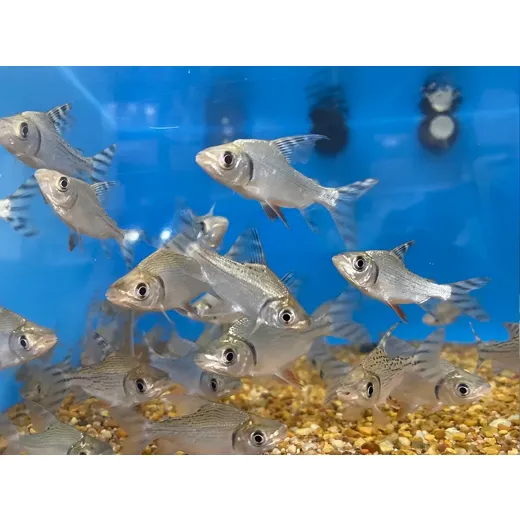
Yellowfin Flagtail Prochilodus (Semaprochilodus lacticeps)
Flagtail Prochilodus are large characins native to South America, making excellent tankmates with larger fish. They feature a shiny silver body with large, pursed lips and a distinctive red and black flagtail pattern on their caudal fin.
These fish are aggressive toward their own kind when kept in small groups and should be maintained in numbers of six or more in larger tanks. Otherwise, they are best kept as a single specimen in a community with medium to large fish.
Flagtails possess a suckermouth similar to that of a pleco, which they use to ingest substrate and clean the tank bottom. They then expel the material, functioning similarly to geophagus species. This makes them a valuable addition to a clean-up crew in freshwater aquariums.
With bright silver bodies and large eyes, they are well-adapted for hunting and offer striking iridescent coloration.
| Species | Yellowfin Flagtail Prochilodus (Semaprochilodus lacticeps) |
|---|---|
| Origin | South America |
| Body Color | Shiny silver |
| Fin Pattern | Red and black on caudal fin |
| Diet | Bottom-feeding, substrate-sucking |
| Aggression Level | High when kept alone or in small groups |
FAQ
Can Flagtail Prochilodus be kept with other fish?
Yes, they can be kept with larger fish in a community setup. However, they should not be kept with other flagtails in small numbers due to aggression. A group of six or more is recommended for peaceful coexistence.
How do Flagtail Prochilodus clean the tank?
They use a suckermouth to ingest substrate from the bottom of the tank, clean it, and then expel it, helping maintain tank cleanliness.
What is the ideal tank size for a single Flagtail Prochilodus?
A larger tank is recommended to provide sufficient space, especially when housing with medium to large fish.


Emma Mills –
Added a single flagtail to my 120-liter tank with larger fish. It’s active and helps keep the substrate clean. The red and black tail pattern is very noticeable. Only kept one to avoid aggression issues.
Vanessa Langdon –
Kept six in a 200-liter tank. They are active and clean the bottom well. A bit aggressive at first, but settled after a week. Great for a clean-up crew.
Brian Pullman –
Bought one for a community tank. It’s not very social and stayed near the bottom. Works fine for cleaning, but not ideal for small tanks.