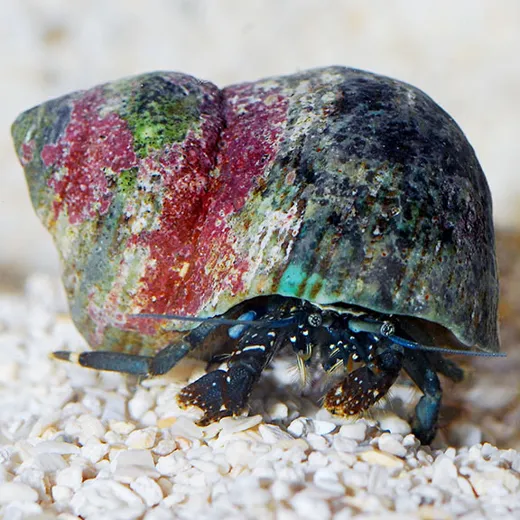
Dwarf Yellow Tip Hermit Crab
The Dwarf Yellow Tip Hermit Crab is one of the more uniquely colored members of the Diogenidae family. The bright yellow bands on its green to black legs add a pop of color to this member of your aquarium’s reef-safe cleanup crew. Like its Blue Leg and Red Tip cousins, the Dwarf Yellow Tip Hermit Crab is a voracious eater of nuisance algae and cyanobacteria. Plus, its small size allows it to forage and scavenge in the tightest of locations amongst live rock.
Native to the coastal waters surrounding Vietnam, the Dwarf Yellow Tip Hermit Crab has claws of equal size and lives in abandoned snail shells. As the Dwarf Yellow Tip Hermit Crab sifts through substrate in search of food, it helps clean and aerate aquarium substrate. This activity helps reduce substrate compaction and promotes a healthier environment for other marine life.
| Species | Dwarf Yellow Tip Hermit Crab |
|---|---|
| Family | Diogenidae |
| Native Habitat | Coastal waters around Vietnam |
| Feeding Habits | Algae and cyanobacteria |
| Shell Usage | Lives in abandoned snail shells |
| Size | Small |
FAQ
What kind of algae does the Dwarf Yellow Tip Hermit Crab eat?
The Dwarf Yellow Tip Hermit Crab primarily eats nuisance algae and cyanobacteria.
Can this hermit crab live in a reef-safe aquarium?
Yes, it is considered reef-safe and is well-suited for marine aquariums.
Does it require specific shell types?
Please contact customer service


Joan Quinn –
Added a Dwarf Yellow Tip Hermit Crab to my reef tank and it’s been active since day one. The yellow bands stand out nicely against the dark rocks. It constantly moves through the sand, eating algae and helping keep the substrate loose. Great for a low-maintenance cleanup crew.
Adam Parsons –
The crab is colorful and active. It doesn’t seem to compete with other tank inhabitants. I noticed it using a snail shell and has been found in tight crevices. Feeding is easy and it stays healthy with regular water changes.
Connor Lambert –
This little crab brings a lot of visual interest. It’s not just cleaning—it’s also helping with substrate aeration. I appreciate how it fits into the ecosystem without causing issues.