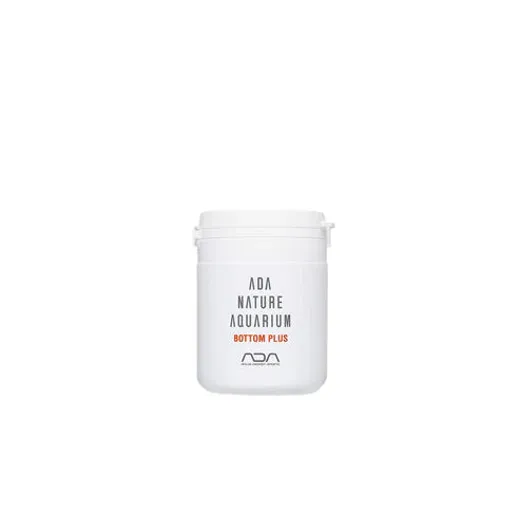
ADA Bottom Plus
Bottom Plus refines the leaf color of aquatic plants through vigorous nutrient absorption from the roots. It is particularly fortified with nitrogen and iron, nutrients that are often deficient in long-term substrates. As it is produced from the same natural soil as the raw material of Aqua Soil, the stick never remains in the substrate.
Key Features
| Component | Function |
|---|---|
| Nitrogen | Supports healthy leaf development and color |
| Iron | Enhances chlorophyll production and leaf vibrancy |
| Natural Soil Base | Ensures complete dissolution and no residue in substrate |
FAQ
How does ADA Bottom Plus differ from other root fertilizers?
ADA Bottom Plus is uniquely formulated with high levels of nitrogen and iron, nutrients commonly lacking in long-term substrates. It is derived from the same natural soil as Aqua Soil, ensuring complete dissolution and no residue left behind in the substrate.
Can ADA Bottom Plus be used with all types of aquatic plants?
It is especially beneficial for plants that show signs of yellowing or pale leaves due to nutrient deficiencies. Best results are seen in plants with active root growth and long-term substrate use.
Does ADA Bottom Plus leave any residue in the substrate?
No, because it is made from the same natural soil as Aqua Soil, it dissolves completely and does not remain in the substrate.


Thomas Walker –
I’ve used ADA Bottom Plus for three months now and my anubias and java ferns have much brighter green leaves. The color improvement is noticeable after just one use. No residue in the substrate, which is a big plus for maintenance.
Grace Grant –
The nitrogen and iron content really helps with leaf development. My plants that were previously pale have become more vibrant. I appreciate that it dissolves completely and doesn’t leave any stick in the soil.
Una Manning –
After switching to ADA Bottom Plus, my water plants look healthier and more active. The roots seem to absorb nutrients better, and the leaf color has improved significantly without any mess in the substrate.